Independent digital studio · Northern Ireland
Hello, neighbour.
Websites, web apps and useful tools, personally built for businesses in Northern Ireland.
Websites
Web apps
Business tools
Open an app. Make yourself at home.
ballyworks
Independent digital studio · Northern Ireland
Independent digital studio · Northern Ireland
Websites, web apps and useful tools, personally built for businesses in Northern Ireland.
Open an app. Make yourself at home.
Ballyworks / Services
From the first impression to the everyday admin, I make things that help your business work better.
Custom design, clear copy and a straightforward way for customers to take the next step. Fast, responsive and yours.
Customer portals, booking systems, order books and dashboards. Software shaped around the people who use it.
Connect enquiries, quotes and follow-ups. Turn the spreadsheet you depend on into something easier to use.
Most of what I build is conventional, because that is what most businesses need: a handsome site that loads fast and turns visitors into enquiries. The desktop you are reading this in is what I do for my own amusement: the same care, pointed somewhere less sensible. You can have as much or as little of that as you like.
Selected work / Systems in daily use
Real systems, built from the ground up for real companies and used daily by their teams. Bespoke software shaped around the business, not an off-the-shelf package.
Real systems. Representative demos. These bespoke systems are deployed and used daily by a real dealership. The live platform stays private to protect customer, employee and commercial data. The examples below show how it works using fictional information.
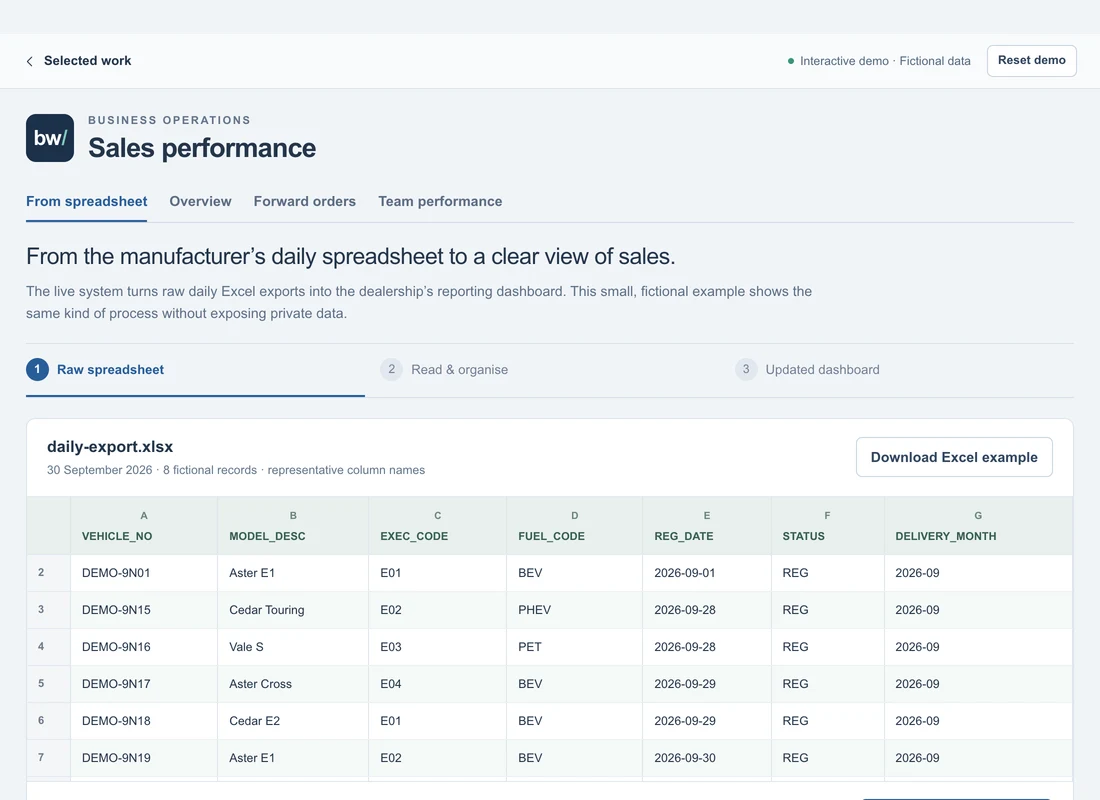
The manufacturer supplies raw data in Excel every day. I built the system that turns those exports into clear sales figures, targets and order books for the dealership.
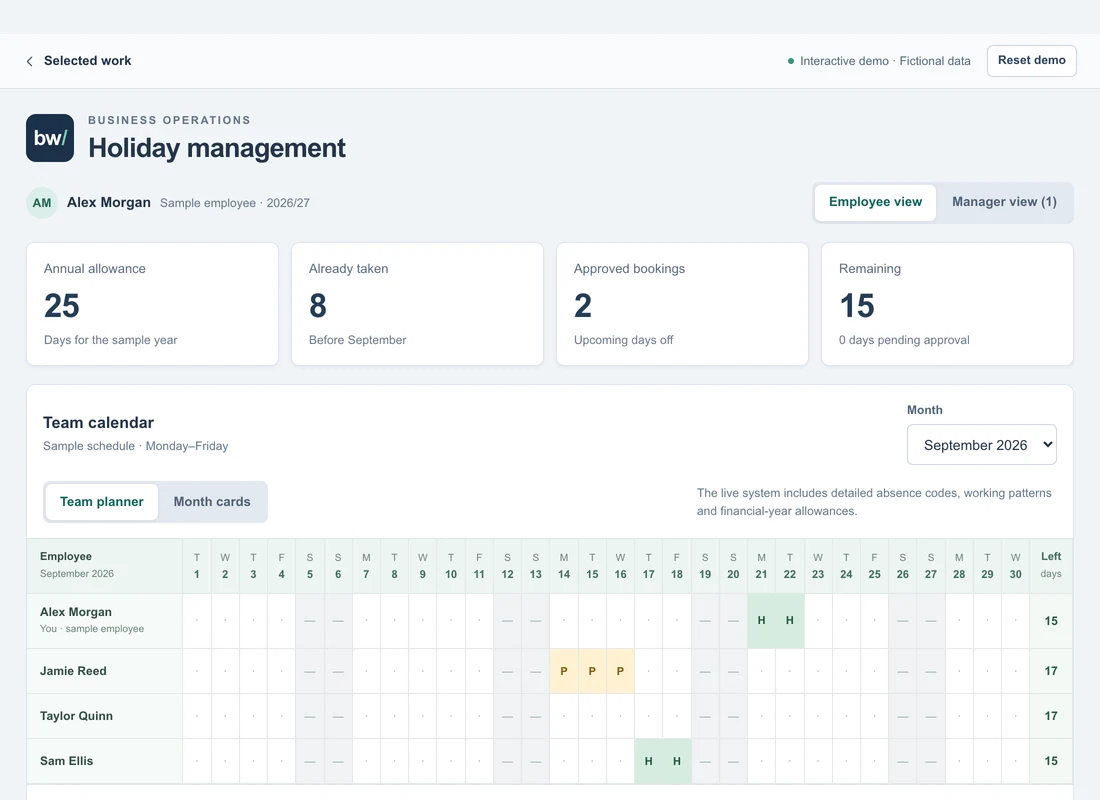
A detailed staff-by-day planner brings requests, absence codes and allowances together. Built around the dealership’s working patterns and financial year.
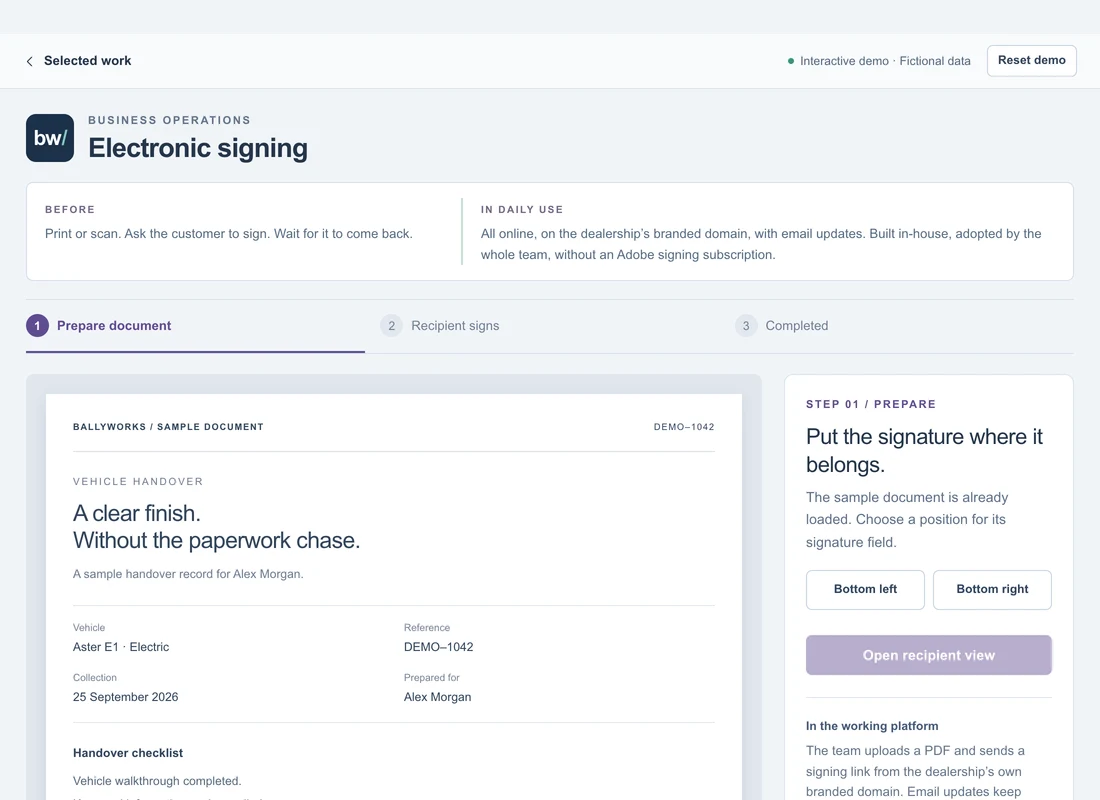
Previously: scan a document, ask the customer to sign and send it back. Now: all online on the dealership’s branded custom domain, with email updates along the way.
Ballyworks / The archive
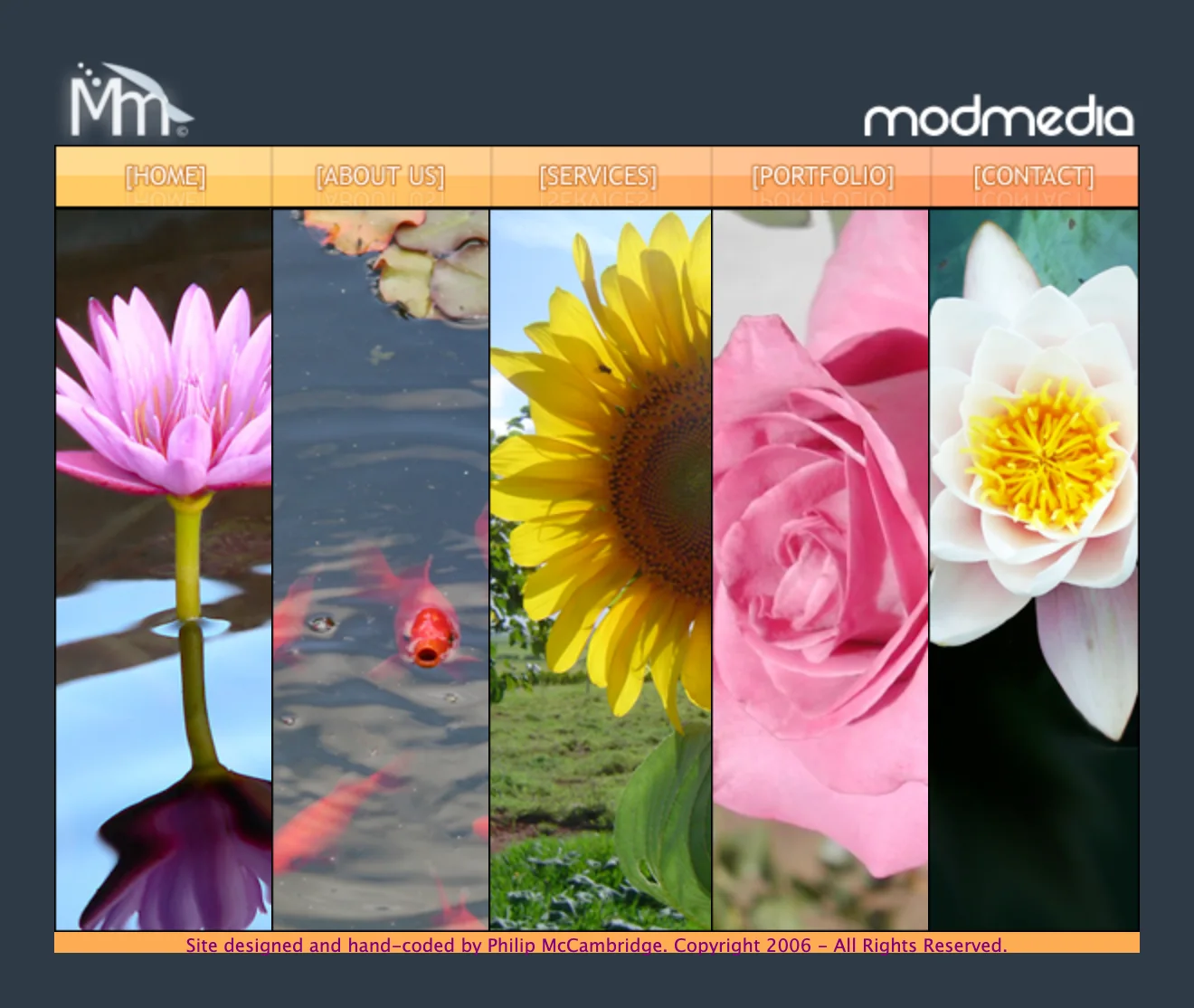
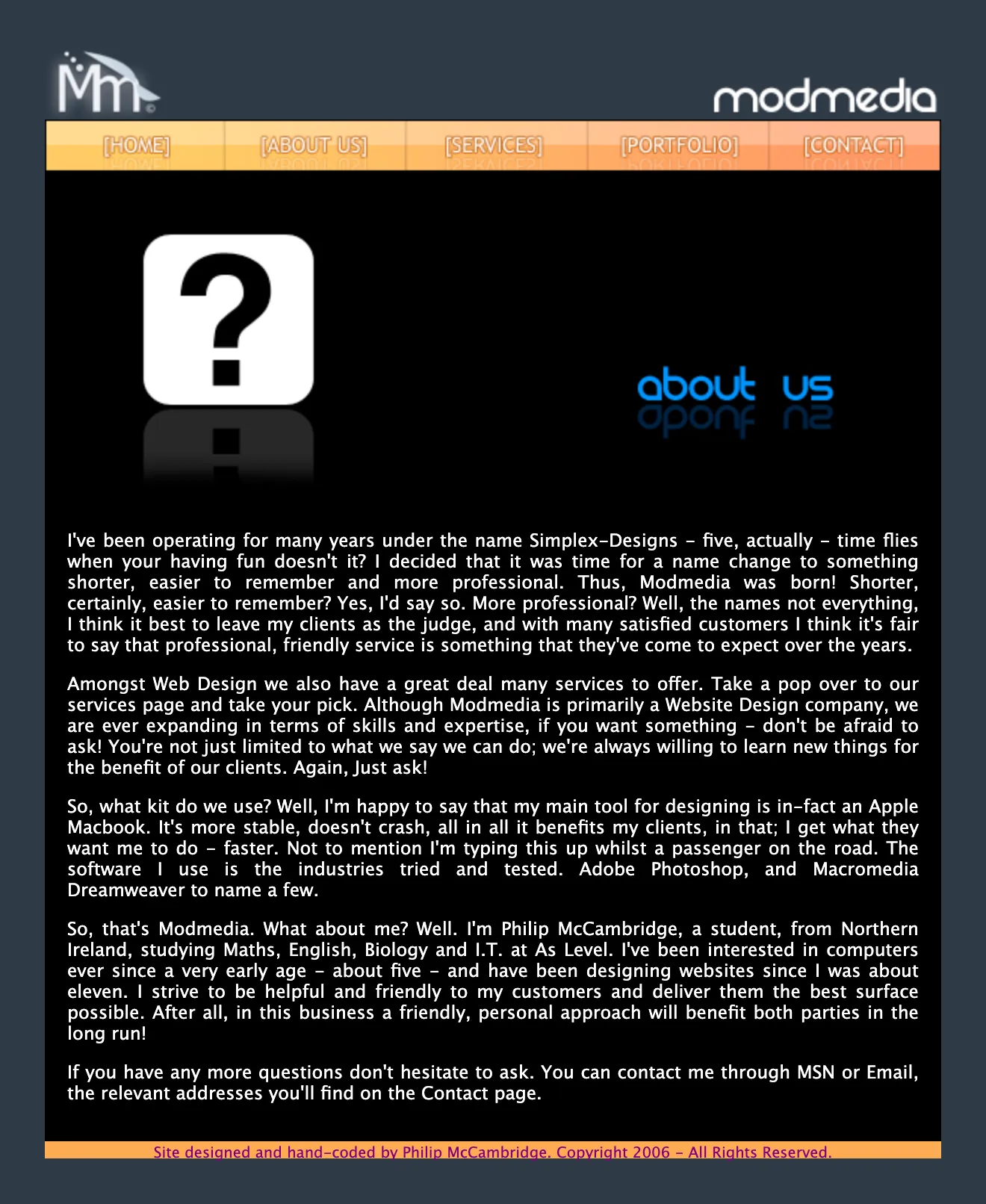
I started building for the web in 2001, and by 2006 I was trading as Modmedia, hand-coding sites from Northern Ireland. Here is what that looked like a year later, put back together from the Internet Archive. If I say so myself, it has not aged too badly.
Modmedia · February 2007
Six hundred pixels wide, hand-coded XHTML and CSS, no framework and no JavaScript. The stylesheet still carries the comment it was written with: “Hand-Coded by Philip McCambridge on an Apple Mac!”
The five rollover buttons below the navigation bar were never captured by the Internet Archive, and neither was the background image. Everything else is the original 2007 artwork.
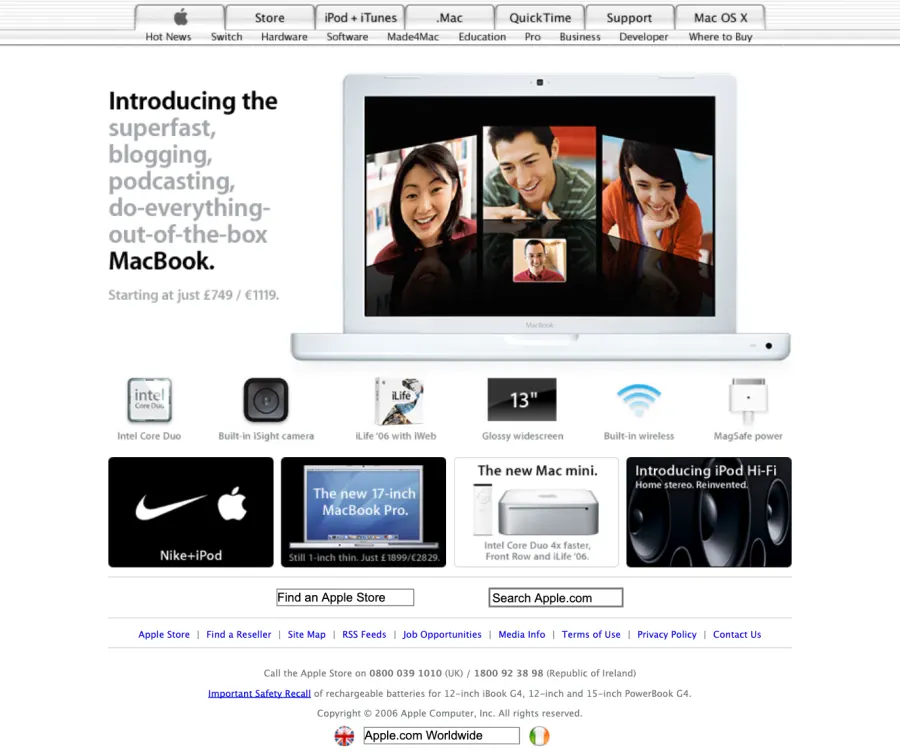
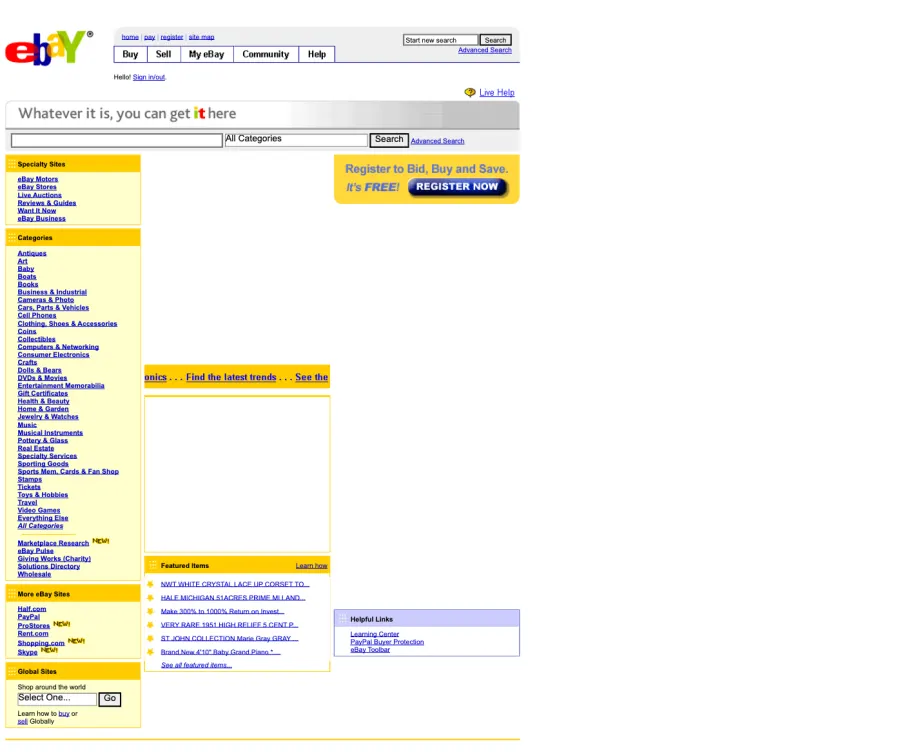
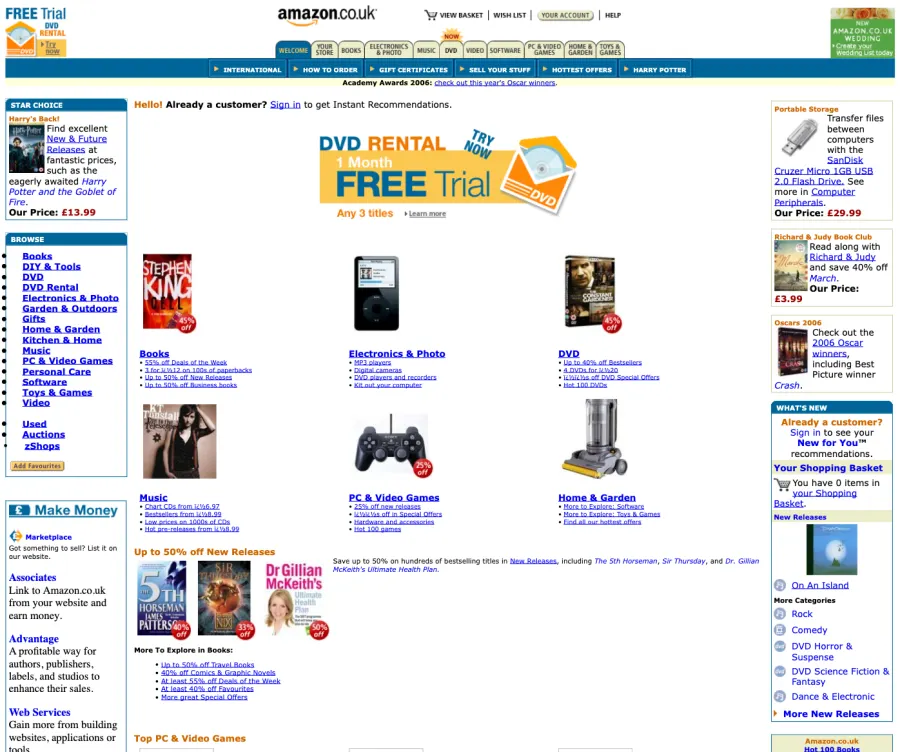
This is what the biggest sites on the web looked like the same year. Have a flick through, then count the tables.
<table> elements holding the page together<table> elements holding the page together<table> elements holding the page togetherScreenshots via the Internet Archive, rebuilt the same way as the pages above. Element counts are from the archived markup. Trade marks belong to their owners and appear here for historical comparison.
Modmedia, a few months later: zero. XHTML 1.1, laid out entirely in CSS, hand-written by one person in Northern Ireland while the largest shops on the web were still nesting tables.
Many sites then used invisible tables to arrange the page. XHTML 1.1 still allowed tables; using CSS for the entire layout was a choice I made. I kept the page structure separate from its styling and wrote to XHTML’s stricter rules for lowercase tags, closing elements and correct nesting.
It took care, but meant I could change the design without rewriting the content. These snapshots show the approach I chose while some of the biggest sites still relied heavily on tables for layout.
Same instinct today, better tools. This desktop is where it ended up. For your business, I build what your customers need, as straightforward or as ambitious as the project calls for.
One person. Personally invested.
I’ve spent eighteen years working face to face with customers, living off enquiries, appointments and follow-ups. I know what one lost enquiry is worth.
I’ve been building for the web since 2001, first as a teenager under a name I have long since retired, then as Modmedia from 2006. After that I stopped taking commercial work for a good while. I never stopped building; it just became something I did at nights, because I wanted to know how a thing worked rather than because anyone was paying me to find out.
Twenty-odd years of that adds up. The instincts came from the hobby, the tools are current, and this site is where the two meet, still pushing at what a browser can be talked into doing.
And if you would rather have something conventional, that is exactly what you will get. A desktop in a browser is what I build when nobody is paying me to be sensible. For your business I build what your customers need, properly made, and as ordinary or as ambitious as suits you.
You’ll see the work as it develops, agree the scope and price before it starts, and get a proper handover when it’s ready.
See what that looked like in 2007 →
Say helloA conversation is a good start
Tell me about the idea, the problem or the thing you keep putting off. We’ll find twenty minutes to talk it through.
hello@ballyworks.comWe leverage best-in-class technology to transform your digital presence and unlock measurable growth at every touchpoint.
We align on your vision.
Data-driven decisions, at scale.
Pixel-perfect, every time.
Starting Ballyworks OS…